

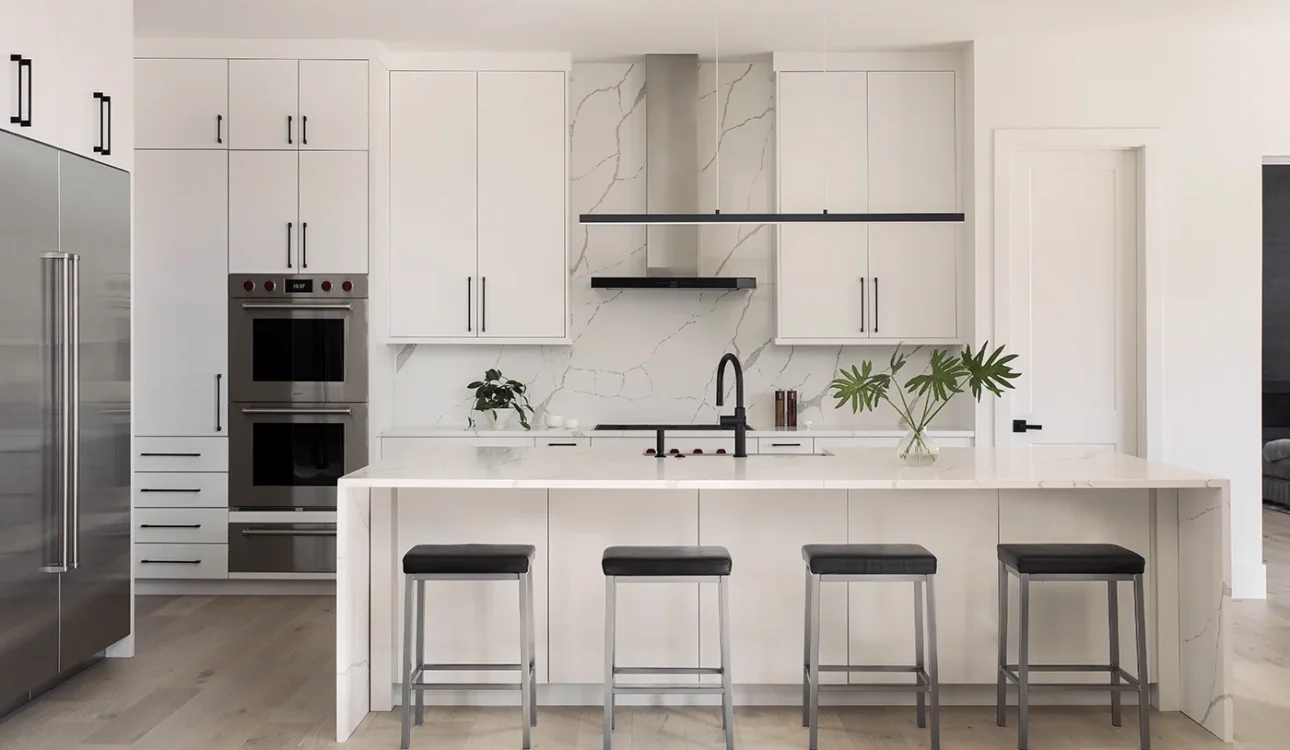
When entertaining guests in your home, the kitchen is almost always where people end up, regardless of how many other rooms the home has. What used to be a happy accident has now become a design intention for many homeowners who want to deliberately build kitchens that function as social hubs. Creating a kitchen design for entertaining ensures you have a place to keep the conversation flowing, guests are comfortable, and hosts are out of the weeds.
If you regularly host dinners, holiday gatherings, or casual get-togethers, your kitchen layout, storage, seating, and lighting all work together to create a welcoming, comfortable space. With some forethought, every one of those elements can be designed with entertaining in mind, and the results are kitchens that are as functional for cooking as they are enjoyable for guests.
Decide On Your Layout
Layout is the foundation of any entertaining-friendly kitchen. Get it right, and your kitchen practically runs itself on a busy night. Get it wrong, and you’ll spend the evening navigating bottlenecks, losing track of guests, and apologizing for chaos.
Open Concept vs. Defined Spaces
Open-concept kitchens remain a strong choice for entertaining. When the kitchen flows into the dining space or living area, hosts can cook and converse simultaneously without being isolated in a separate room, and guests feel connected to the action rather than waiting on the other side of a wall.
That said, fully open kitchen layouts aren’t always ideal. Without any visual separation, clutter and cooking mess become part of the living room backdrop. Oftentimes, it’s best to take a hybrid approach, using a large island, peninsula, or half-wall to create a soft boundary between the working and social sides of the kitchen. Sometimes, depending on available space, a secondary prep area or butler’s pantry to store appliances and tuck away daily-use items keeps the main kitchen clean and company-ready.
Prioritizing Traffic Flow
Poor traffic flow is one of the most common yet avoidable problems in kitchens designed for entertaining. When pathways between cooking, serving, and seating areas are too narrow or convoluted, guests naturally gravitate toward wherever the host is working, creating bottlenecks right where you need to move most.
It’s recommended to have a minimum aisle width of 42 inches, but in kitchens built for entertaining with multiple people in the space, 48 to 54 inches is a much more comfortable target. Pathways between the cooking zone, the island, and the seating area should feel natural and unobstructed, even when the kitchen is full of people.
Work Triangle vs. Work Zones
The classic kitchen work triangle, linking the refrigerator, sink, and range, was designed for a single cook in a smaller kitchen space. Today’s kitchens, however, are larger, house more appliances, and regularly accommodate multiple people cooking and socializing at once. That’s why many designers have shifted toward a work zone approach instead.
Rather than optimizing for one person’s movement between three points, work zones divide the kitchen into designated functional areas: prep, cook, serve, and clean. Each zone is stocked with the tools and storage space needed to complete its tasks without unnecessarily crossing into another zone. The result is a kitchen where two people can cook together without constantly getting in each other’s way, and where guests can pour their own drinks without wandering into the middle of dinner prep.
For the most functional entertaining kitchens, combine both of these approaches: use the triangle logic for core appliance placement, then layer in dedicated zones for entertaining and serving. This will ensure the kitchen functions well for day-to-day cooking while easily accommodating guests when hosting.
Incorporate Ample Seating Options
Where guests sit and how comfortably they sit shape the entire feel of a gathering. A kitchen with smart seating invites people to linger, while one without it pushes guests out of the room the moment they’re not needed.
Kitchen Islands as Social Centers
The kitchen island has become the undisputed centerpiece of the entertaining kitchen. A well-designed island handles food prep, casual dining, and social interaction simultaneously, making it one of the most versatile investments in any remodel.
Island design is also evolving. Designers are moving away from the traditional straight-row barstool setup in favor of a U-shaped layout, wrap-around counter, or L-shaped seating, which allows guests to face each other and the host rather than staring at the wall. For entraining, aim for at least 12 to 15 inches of knee clearance beneath the countertop overhang, with seating spaced about 26 to 28 inches apart per stool.
Bar Seating and Breakfast Areas
Bar seating along a peninsula or kitchen wall keeps guests close to the action without contributing to foot traffic in the cooking zone. Counter-height seats (around 24-26 inches) tend to be more comfortable for longer gatherings than traditional bar-height options, and stools with backs add meaningful comfort during extended get-togethers.
Flexible Seating Solutions
Not every gathering is the same size, which is where flexible seating earns its value. Backless, stackable stools that tuck cleanly under the island overhang are easy to pull out when extra guests arrive. Extendable dining tables positioned near the kitchen can expand from an intimate weeknight dinner size to accommodate a larger crowd. Built-in bench seating along a kitchen wall is another increasingly popular option as it’s space-efficient, comfortable, and often includes hidden storage underneath, making it a practical bonus for any hosting household.
Elevated Design Elements Made for Entertainment
Once the layout and seating are dialed in, the right appliances, storage, and dedicated stations can take an entertaining kitchen from functional to genuinely impressive.
Double Appliances and Smart Upgrades
For hosts who regularly cook for larger groups, double appliances are a game-changer. A double oven means the main dish and the sides don’t have to compete for rack space or for timing. Warming drawers keep finished dishes at the right temperature while you focus on the next course. A dedicated beverage refrigerator keeps drinks chilled and accessible without anyone having to open and close the main fridge all evening. A wall oven presents more storage space elsewhere in the kitchen while maintaining sleek sightlines.
Smart appliance upgrades add another layer of convenience. Wi-Fi-connected ovens, precision temperature controls, and app-managed settings let hosts focus on guests rather than constantly monitoring the kitchen.
Strategic Storage Solutions
In an entertaining kitchen, storage accessibility is just as important as capacity. Serving platters, large utensils, specialty glassware, and appliances used specifically for hosting should be stored close to where they’ll be used, not buried in the back of a cabinet. Deep drawers, pull-out shelves, and in-cabinet organizers bring frequently used items forward without requiring a full excavation before guests arrive.
Reducing visual clutter matters just as much. Hidden storage, such as appliance garages, integrated cabinetry, and concealed pantry systems, keeps countertops clear and the kitchen looking polished even during active cooking.
Dedicated Beverage or Prep Stations
One of the most effective ways to reduce congestion in an entertaining kitchen is to pull specific tasks out of the main cooking zone entirely. A dedicated beverage station outfitted with a beverage or wine fridge, an ice maker, a bar sink, and glassware storage provides guests with a self-serve zone that keeps them out of the cooking area. A secondary prep station with its own sink and counter space allows another cook or curious helper to assist without crowding the range. Industry experts suggest positioning these stations away from the primary work triangle, often at the island’s far end or along an adjacent wall, so that the serving and cooking zones don’t overlap. If you host often, a beverage station can grow into a custom home bar with its own cabinetry, seating, and storage, whether it sits just off the kitchen or in a finished basement.
Lighting and Atmosphere Matter
Great food and good company deserve the right ambiance, and that starts with thoughtful lighting.
Layered Lighting Design
A single overhead light source isn’t enough for a kitchen built around entertaining. The most effective approach uses three layers:
- Task lighting: Bright, focused light over prep and cooking areas
- Ambient lighting: Overall room illumination, typically from recessed cans
- Accent lighting: For visual interest, often under-cabinet LEDs or inside glass-front cabinets
Dimmers on ambient and accent circuits are essential, allowing the kitchen to be bright and functional for cooking and warm and relaxed once the meal is served.
Statement Light Fixtures
Lighting has become a design feature, elevated from a functional requirement. Pendant lights above an island, a chandelier over a breakfast nook, or a sculptural fixture above the dining area all add visual focus and personality to the space. The fixtures should feel curated rather than incidental, featuring interesting glass, thick metals, or even natural materials like rope or fabric. The key is to balance statement value with practical output, because a beautiful pendant that doesn’t provide adequate light over a food-prep surface defeats its purpose.
Blend Style with Durability
Kitchens designed for regular entertaining see more traffic, more spills, and more wear than kitchens used strictly for family meals. Choosing materials that can meet those demands requires both style and durability.
Durable Countertops and Flooring
Quartz remains a top countertop choice for entertaining kitchens because it’s non-porous, highly stain-resistant, and requires minimal maintenance, which is ideal for the inevitable wine spills and grease splatters that come with frequent hosting. Granite is another strong option, offering natural beauty and excellent heat resistance.
For flooring, large-format porcelain tile or luxury vinyl plank holds up to heavy foot traffic and cleans easily. Avoid highly textured or porous materials that trap crumbs and absorb spills, as these surfaces become maintenance burdens over time.
Easy-to-Clean Surfaces
Backsplashes and cabinet finishes deserve the same consideration. Glazed ceramic and porcelain tile backsplashes are among the easiest surfaces to wipe down after a messy cooking session. Painted cabinet finishes in a satin or semi-gloss sheen clean more easily than flat finishes and hold up better to repeated wiping. Matte or highly textured cabinet surfaces can look sophisticated, but they’re harder to keep clean in a high-use kitchen, which is worth factoring in during the design process rather than after the fact.
Common Questions About Designing a Kitchen for Entertaining
What makes a kitchen good for entertaining?
A great entertaining kitchen combines clear traffic flow, ample seating, and dedicated zones that separate cooking from socializing. Layout, storage placement, and lighting all play a role. The goal is a space where hosts can cook comfortably while guests feel welcome and included.
How large should a kitchen island be for entertaining?
For a kitchen designed with entertaining in mind, a 7-foot island is a solid baseline. Larger gatherings benefit from an island length of 8 to 10 feet, which allows for both seating and active prep space simultaneously. Plan for 26 to 28 inches of seating width per person and at least 42 inches of clearance on all sides with foot traffic in mind.
Do I need an open concept kitchen to entertain?
Not necessarily. Open-concept layouts make it easy to stay connected with guests while cooking, but a well-designed kitchen with a large island, peninsula, or pass-through window can accomplish the same thing. What matters most is sightlines, traffic flow, and seating, not whether walls exist.
Work with a Professional Kitchen Designer Today
A kitchen built for entertaining is one of the most rewarding investments a homeowner can make, but getting the layout, seating, storage, and design details right requires expertise. The decisions you make during the planning phase shape how your kitchen functions for years to come.
RSI Kitchen & Bath’s team of professional designers can help you bring your vision to life through our kitchen design services, from the initial layout conversation to final material selections. Whether you’re planning a full remodel or upgrading key elements of your current kitchen, our designers work with you to create a space that’s as impressive as it is functional.
Visit our St. Louis or Columbia showroom to see designs in person and speak with a kitchen designer who understands what it takes to build a kitchen around the way you actually live and host.