

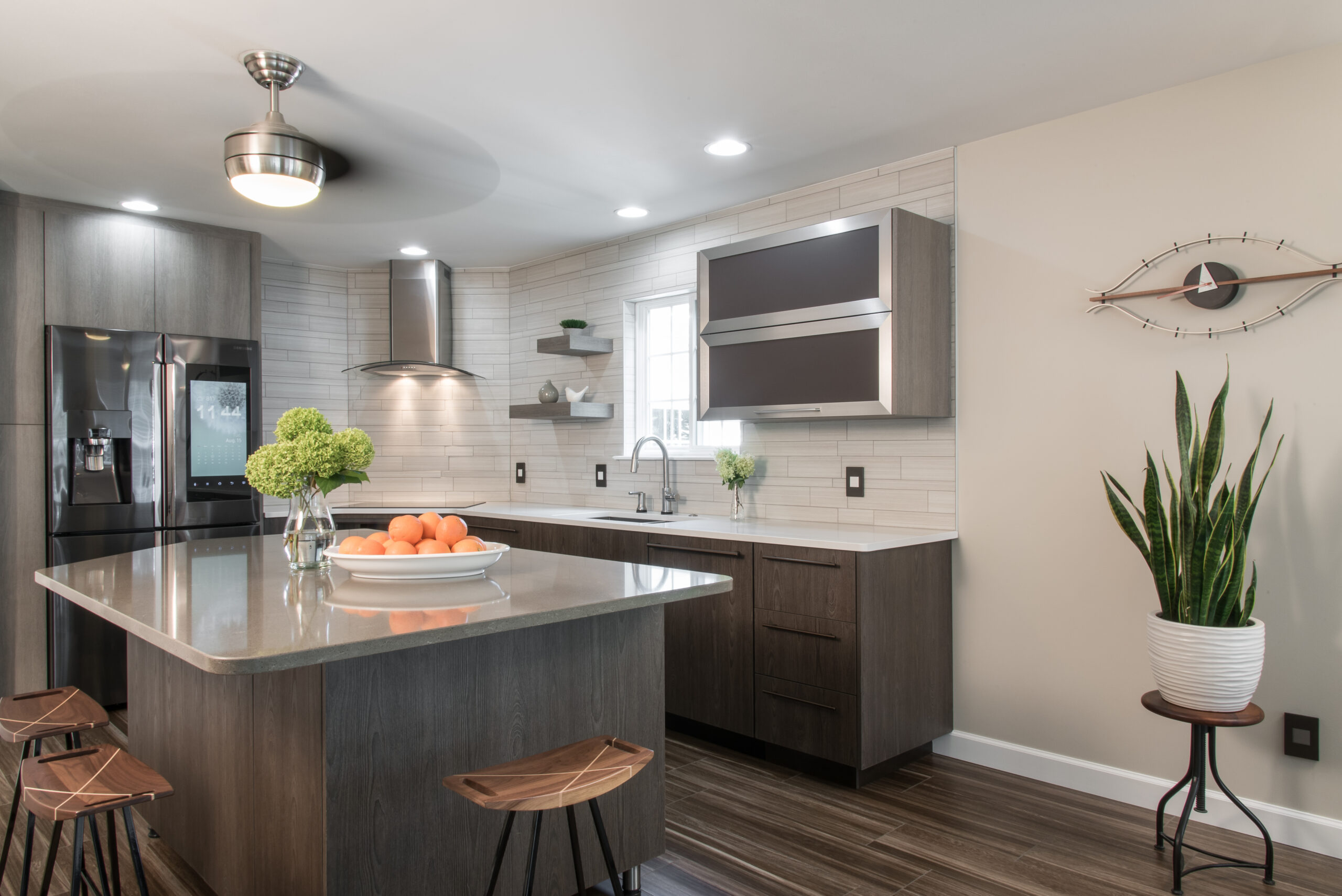
The kitchen has always been the heart of the home, but it’s also becoming one of the smartest rooms in the house. From refrigerators that track what’s inside to faucets that respond to a wave of your hand, smart kitchen technology is transforming the way homeowners cook, clean, and live. And with the smart kitchen appliances market projected to reach nearly $44 billion by 2031, the shift is quickly becoming the new standard.
Whether you’re planning a full kitchen renovation or a targeted upgrade, incorporating smart technology during a remodel is far easier and more cost-effective than retrofitting later. In this guide, we’ll walk through the key technologies to consider, how they work together, and what to keep in mind as you plan your smart kitchen remodel. If you’re ready to start exploring what’s possible, our kitchen design services are built to help you bring these ideas to life.
What Is a Smart Kitchen?
A smart kitchen is one where appliances, fixtures, and systems are connected to the internet, to each other, and to you. Through Wi-Fi, Bluetooth, or emerging protocols like Matter and Thread, smart kitchen devices communicate in real time, respond to voice commands, can be monitored remotely via smartphone, and often learn your habits over time to work more efficiently.
Today’s smart kitchens aren’t science fiction. They’re practical, increasingly affordable, and designed to integrate seamlessly into real residential spaces, including remodels. When you choose devices for a smart kitchen, the goal is selecting tools that solve real problems in your daily routine: streamlining food preparation, automating coffee makers to match your morning schedule, and serving up recipe suggestions based on what you already have on hand.
Key Features of a Smart Kitchen
- Connected appliances (refrigerators, ovens, dishwashers) are controlled via app or voice
- Voice assistants and hands-free controls integrated through Amazon Alexa, Google Assistant, or Apple HomeKit
- Automated lighting that adjusts to time of day, occupancy, or activity
- Smart plumbing fixtures with touchless operation and water usage tracking
Benefits of Integrating Technology Into Your Kitchen Remodel
Convenience and Time Savings
The most immediate payoff of a smart kitchen remodel is simply making daily life easier. Smart appliances let you preheat the oven on your commute home, brew coffee on a schedule, and check whether you left the stove on, all from your phone. AI-enabled refrigerators from brands like LG and Samsung can track inventory and surface recipe suggestions based on what’s inside, reducing the mental load of meal planning.
Increasingly, appliances don’t even wait to be asked. Ovens can preheat based on your calendar, and pantry systems can suggest meals from available ingredients, shifting from reactive to genuinely proactive assistance. For busy households, that kind of automation makes a noticeable difference in the rhythm of everyday life.
Energy Efficiency and Sustainability
Smart appliances are engineered to reduce waste. Induction cooktops with smartphone scheduling, dishwashers with AI-powered load sensing, and ENERGY STAR-certified refrigerators all help lower utility consumption without sacrificing performance. Many smart appliances can be set to run during off-peak energy hours, further reducing costs. For environmentally conscious homeowners, these features add real, measurable value.
Improved Safety and Security
Smart kitchens are significantly safer kitchens. Modern connected appliances and sensors can detect smoke, gas leaks, and unusual activity patterns, sending real-time alerts to your phone and triggering automatic shut-offs before small problems become serious ones. A stove that detects you’ve stepped away and adjusts accordingly, or a range hood with sensors that automatically boost ventilation when smoke is detected, represents the kind of safety-forward design that’s increasingly standard in connected kitchen systems.
Increased Home Value
Connected cooking suites are becoming a top remodeling priority as homeowners demand future-proof investments. Buyers, especially in the move-up market, increasingly expect smart features, and a well-integrated smart kitchen remodel can be a meaningful differentiator at resale. Importantly, choosing scalable, ecosystem-compatible systems ensures your investment stays relevant as technology evolves.
Must-Have Smart Kitchen Technologies
Smart Appliances
Connected appliances are the centerpiece of any smart kitchen remodel, and the options available for residential use are more capable than ever. Whether you’re working with a generous budget or planning a budget-smart kitchen remodel, there are connected appliance options at a range of price points that deliver a meaningful upgrade over traditional models:
- Smart refrigerator: Models from LG, Samsung, and Thermador now offer interior cameras for remote viewing, food tracking that logs expiration dates, and touchscreen interfaces for notes, recipes, and family calendars.
- Smart ovens and ranges: Wi-Fi-enabled smart ovens support remote preheating, guided cooking programs, and AI features like Miele’s Smart Food ID, which identifies what’s placed inside and suggests the optimal cooking mode automatically.
- Smart dishwashers: Smart dishwashers adjust water and energy use based on load size, run during off-peak hours, and send cycle notifications to your phone. Some models can even reorder detergent automatically.
- Range hoods: Sensor-equipped ventilation hoods detect smoke and steam, automatically ramping up fan speed to maintain air quality hands-free.
Smart Lighting Systems
Lighting has an outsized impact on how a kitchen feels, and smart systems give you precise, effortless control over it. A layered lighting plan that combines ambient, task, and accent sources is the foundation of effective smart kitchen lighting, and it makes a particularly huge difference in smaller spaces where maximizing natural light and minimizing shadows is essential. Motion-sensor smart lighting eliminates fumbling for switches when your hands are full, while voice-controlled fixtures let you adjust brightness and color temperature on command. Tunable white lighting can shift from cool daylight tones for meal prep to warm ambient tones for dining, all programmed or automated to fit your routine. Under-cabinet lighting is a practical application, brightening counter space while integrating cleanly into the overall design.
Smart Faucets and Plumbing Fixtures
Touchless and voice-activated kitchen faucets have moved firmly into mainstream residential design. Motion-sensor faucets respond to a hand wave or a voice command through Alexa, Google Assistant, or Apple HomeKit, keeping the sink hygienic during food preparation. Beyond convenience, the water conservation case is compelling: sensor-activated faucets run only when hands are actively present, which research suggests can reduce household water waste at the sink by up to 50%.
Higher-end models also include built-in filtration, water temperature memory, and app-connected usage tracking, making them a smart investment for both daily utility and long-term efficiency.
Smart Storage Solutions
Storage is one of the less-talked-about frontiers of kitchen technology, but the options are genuinely useful, especially when the goal is to save counter space and keep the kitchen feeling organized. Motorized cabinet lift systems bring upper cabinets down to counter height, improving easy access for all ages without sacrificing extra storage. Smart pantry systems with inventory tracking using RFID sensors or camera-based AI can alert you when staples run low and, in more advanced setups, trigger automatic reorders.
For smaller spaces, smart storage design makes a particularly big impact on how a kitchen looks and functions. Pull-outs in base cabinets and soft-close drawers throughout improve organization and give the space a feel of a much larger kitchen, while keeping everything within reach. Open shelving, when balanced with closed cabinetry, can add breathing room and easy access to everyday essentials without cluttering the design.
Designing a Smart Kitchen That Works for You
Start With Your Lifestyle Needs
Smart technology is only as good as how well it fits into your actual daily routines. A busy family that cooks most nights has different priorities than a couple who entertains occasionally. Start by identifying the friction points in your current kitchen, whether that’s managing energy use, keeping track of groceries, or simply wishing you had more hands while cooking, and let those drive your technology choices. Small details like where outlets are placed, whether your kitchen island has integrated charging, or how your lighting responds when you walk in at night can shape the entire experience of the space.
Ensure Compatibility Between Devices
One of the most common pitfalls in smart kitchen planning is building a fragmented ecosystem. If your oven speaks one language and your lighting system speaks another, the promise of seamless integration falls apart quickly. Look for appliances and devices certified for Matter 1.4, the current industry interoperability standard, which allows products from different brands of ovens, cooktops, water heaters, and lighting to share data and work together under one app or platform.
Plan for Connectivity and Power
Smart appliances depend on a reliable wireless signal. During a remodel is the ideal time to assess your home’s Wi-Fi coverage, address dead zones with mesh networking, and ensure your kitchen has adequate outlet placement to support the devices you’re adding. Hardwired power is preferable for high-use fixtures like smart faucets, which draw more power than batteries can sustain long-term. Your designer and electrician should collaborate on this early in the process.
Balance Technology With Design
The best smart kitchens simply look like beautiful kitchens. Panel-ready appliances that blend into custom cabinetry, flush-mounted screens, concealed charging stations, and appliance garages for smaller connected gadgets all help maintain a clean, cohesive aesthetic while keeping smart features accessible. Finishing choices like quartz countertops, integrated hardware, and thoughtful material selections tie the design ideas together so the technology enhances rather than competes with the overall look. The goal is a space where the technology quietly does its job without dominating the design.
Common Mistakes to Avoid
Overcomplicating the Setup
More apps and more systems don’t necessarily mean a better smart kitchen. When every appliance requires a separate app with its own login and interface, the experience becomes a burden rather than a benefit. Prioritize devices that consolidate control, either through a unified smart home platform or a single well-integrated app, so your kitchen actually simplifies your life.
Ignoring Future Upgrades
Smart home technology moves quickly, and investing in closed, proprietary systems can leave you stuck with products that are incompatible with future upgrades or no longer supported by their manufacturers. Choose appliances and platforms built on open standards like Matter and Thread, which are designed for long-term interoperability and scalability. Your smart kitchen should grow with you, not lock you in.
Skipping Professional Design Guidance
Smart kitchen integration requires careful thought about how they work within your space. Outlet placement, Wi-Fi infrastructure, cabinetry designed around built-in appliances, and lighting layouts all require coordination from the beginning. Experienced kitchen designers who understand connected technology can anticipate these needs early, preventing costly mid-project changes. RSI Kitchen & Bath guides clients through the design and planning process, helping you think through layout, cabinetry, and infrastructure so every decision supports the smart features you want. For appliances, RSI partners with Authorized Appliance, where you can explore many of the smart appliance technologies available. Smart home electrical needs are handled through Streib Electric, ensuring your space is properly wired and ready for the connected features you’re planning.
Common Questions About Smart Kitchen Remodels
What is the best smart technology to add during a kitchen remodel?
The highest-impact additions are smart appliances (smart refrigerators, ovens, and dishwashers), smart lighting with motion or voice control, and a touchless faucet. These cover convenience, efficiency, and safety—the core benefits of a connected smart kitchen—and are easiest to install properly when the kitchen is already under construction.
Are smart kitchens expensive to install?
Costs vary widely depending on the level of integration. A budget smart kitchen remodel might start with entry-level connected appliances, like smart dishwashers or voice-activated lighting, at a minimal premium over standard models. Full ecosystems with AI-enabled appliances, motorized storage, and whole-kitchen automation represent a larger investment, but one that typically delivers long-term energy savings and adds measurable resale value. A kitchen renovation is the most cost-effective time to install, since infrastructure like wiring and outlets is already being addressed.
Do smart kitchen features increase home value?
Yes, when done well. Connected cooking suites are a top remodeling priority for today’s buyers. Smart features appeal to move-up buyers who expect modern conveniences, and a cohesive, well-integrated system is more attractive than a collection of mismatched gadgets. The key is choosing quality appliances and designing the space so technology enhances rather than clutters the smart kitchen.
Can I add smart technology to an existing kitchen?
Many smart upgrades, such as touchless faucets, smart bulbs, voice-enabled plugs, or a connected countertop appliance, can be added without a full remodel. However, a kitchen renovation provides the best opportunity to plan for smart technology holistically, including proper outlet placement, Wi-Fi infrastructure, and appliances that integrate cleanly with cabinetry. Retrofitting later is possible but typically more expensive and limited.
Upgrade Your Kitchen With Smart Design Solutions
A smart kitchen remodel is about designing a space where technology and function work seamlessly together. That requires experience, planning, and a design partner who understands both the aesthetic and technical sides of the process.
RSI Kitchen & Bath brings that expertise to the design and planning side of every project, ensuring your cabinets and layout is built to support the connected features you want. RSI is the design foundation that ensures everything works together, and, through our trusted partnerships with Authorized Appliance and Streib Electric, you can rest assured your smart kitchen upgrade process will be done well and done right.
Ready to start planning? Visit our St. Louis showroom or our Columbia showroom to talk through your kitchen design goals, or connect with our team to get started.