

Every few years, a new wave of kitchen design trends sweeps through home improvement magazines and social media feeds, from bold colors to unusual materials and quirky hardware. Some of those trends look stunning for a season before they start to feel dated. Others stand the test of time and look just as fresh and inviting years after they were installed.
The difference comes down to a few fundamental principles: proportion, quality, simplicity, and a focus on function. Timeless kitchen renovations aren’t boring, but they are intentional. They prioritize enduring beauty over fleeting novelty, and they tend to add more long-term value to your home than trend-chasing choices ever will.
In this guide, we’ll break down the classic kitchen design ideas, long-lasting kitchen materials, and functional layouts that homeowners and designers keep coming back to year after year. Whether you’re planning a full kitchen remodel or simply refreshing a few key elements, these are the choices that will serve you well for decades to come.
Show Your Personal Style
One of the most common pieces of advice from our design team is to avoid chasing trends with the big-ticket, labor-intensive elements of your kitchen. Cabinetry, countertops, flooring, and appliances are expensive and time-consuming to replace, so these are the places to invest in classic, enduring choices.
However, timeless doesn’t have to mean personality-free. There are several areas of your kitchen where it’s great to embrace a trend or let your personal style shine because they’re relatively inexpensive to update in the future:
- Backsplash tile: a bold pattern, an on-trend color, or an unexpected material here can add real personality without a major commitment.
- Hardware: Swapping cabinet pulls and knobs is one of the easiest, most affordable kitchen updates you can make, so have fun with it.
- Lighting: Pendant styles, fixture finishes, and even ceiling-mounted lights can be updated with minimal disruption and cost.
Think of these elements as the accessories of your kitchen that reflect your personality and current tastes, knowing you can refresh them in a decade without a full renovation.
Neutral Color Palettes That Endure
Color is one of the first things people notice in a kitchen, and one of the fastest ways a design can start to feel dated. Bold, trendy colors may feel exciting at first, but they’re often the first thing homeowners want to change five years down the road. Neutral palettes, on the other hand, provide a flexible, sophisticated foundation that adapts to changing tastes, furnishings, and accessories over time.
Classic White Kitchens
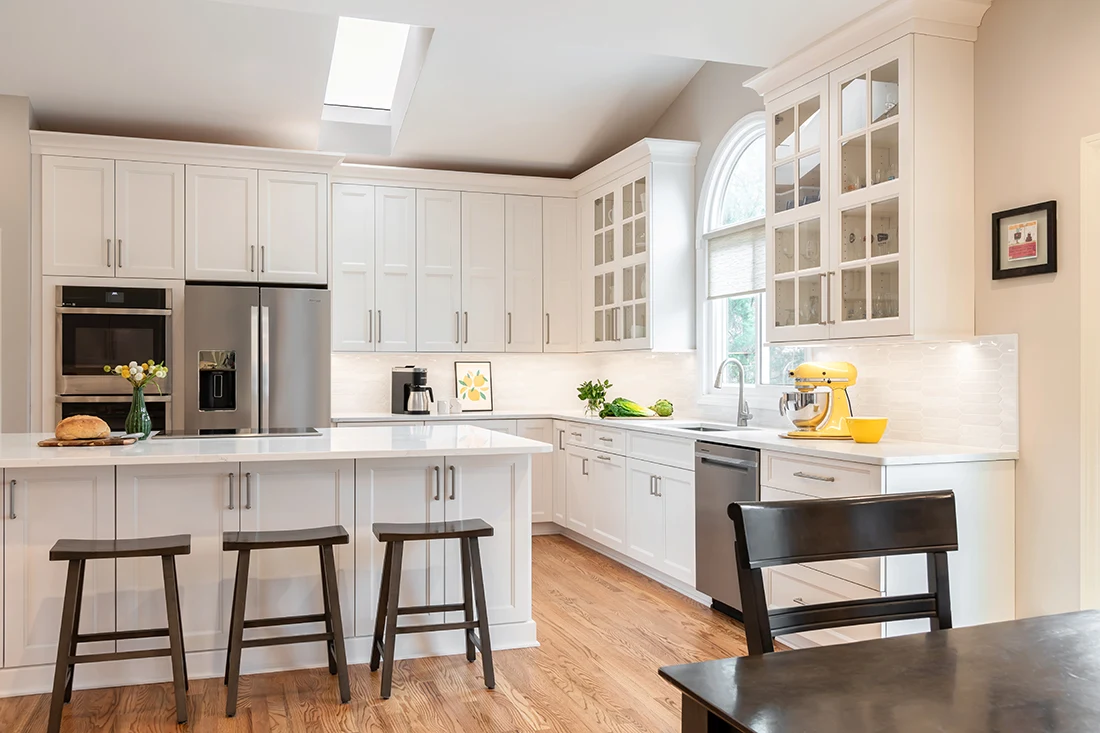
White has remained a top choice in kitchen design for well over a century, and for good reason. White kitchens feel bright, open, and clean. They create a sense of spaciousness, which is especially valuable in smaller kitchens, and they serve as a neutral canvas that allows other design elements to shine.
The key to making a white kitchen feel warm rather than sterile lies in the details. Textured cabinet doors, like shaker-style profiles or subtle raised panels, add visual depth. White cabinets or walls in off-white and cream tones, such as linen, warm white, and soft ivory, feel more inviting than stark, cool whites. Natural wood accents, stone countertops, and warm-toned hardware all help soften the palette and ground the space in organic warmth.
A well-designed white kitchen doesn’t look trendy; it looks timeless. And that’s exactly what you want when making a long-term investment in your home.
Warm Neutrals & Earth Tones
While soft gray had a long run as a popular alternative to white, design trends have shifted. Gray is on its way out, and warm, earthy tones are taking center stage. Browns, warm taupes, and camel-toned cabinetry are increasingly the choice for homeowners who want something other than white, but equally enduring.
Warm neutrals like greige (a gray-beige blend), rich taupe, and soft sage are popular choices that add subtle depth and sophistication without veering into trendy territory. These tones feel grounded and organic, and they pair beautifully with the natural wood accents and stone surfaces that define timeless kitchen design.
The trick is to avoid shades that are too saturated or too trendy. A muted, complex neutral will always outlast a bold statement color, and it leaves room to update your décor without replacing your cabinets or other pricier features.
Pairing Neutrals with Natural Materials
Neutral kitchen palettes come alive when paired with natural textures. A white or off-white cabinet base becomes rich and layered when paired with a honed marble or quartz countertop, warm-wood floating shelves, and brushed-metal hardware. Consider:
- Wood accents, such as butcher block countertops, open wood shelving, or a wood-toned kitchen island, add warmth and organic contrast to a cool neutral palette.
- Stone countertops in natural veining patterns bring movement and visual interest to a simple, clean cabinet color.
- Brushed nickel, matte black, or unlacquered brass hardware adds a finishing layer of texture and sophistication that ties the whole design together.
Quality Materials That Stand the Test of Time
The materials you choose for your kitchen renovation will determine how the space looks as well as how it performs over years of daily use. Investing in long-lasting kitchen materials is one of the smartest decisions you can make, and the materials that have proven themselves over time tend to be the same ones that consistently make “timeless kitchen” lists.
Natural Stone & Quartz Countertops
Countertops take more daily abuse than almost any other surface in your kitchen, coming into contact with hot pots, sharp knives, spills, and constant use. Choosing the right material matters.
Natural stone countertops, such as marble, granite, and soapstone, have been used in kitchens for centuries. Their unique veining patterns, cool surface temperatures, and sheer physical presence bring a sense of quality and permanence to any kitchen design. Marble in particular has an almost unmatched sense of elegance, while granite offers exceptional hardness and heat resistance.
Quartz countertops have surged in popularity over the past two decades. Engineered from natural quartz crystals and a small percentage of resin, quartz countertops are non-porous (meaning they never need sealing), highly resistant to staining and scratching, and incredibly consistent in appearance. Because quartz is manufactured, it can be produced in a wide range of colors and patterns, including looks that mimic natural stone beautifully.
Both natural stone and quartz offer a timeless aesthetic that will complement nearly any kitchen style, from traditional to contemporary, for decades.
Classic Tile Backsplashes
A kitchen backsplash is one place where it’s tempting to get creative with bold patterns and colors, and while there’s nothing wrong with personality, this is also one of the easiest places for a kitchen to look dated.
The most timeless backsplash choice? Subway tile. It’s simple, clean, and elegant, and the rectangular subway tile has been a design staple since the early 1900s, and it still looks fresh today. Whether installed in a classic horizontal block pattern or a more sophisticated herringbone layout, white or soft-neutral subway tile will complement virtually any kitchen style.
Other enduring choices include simple square tiles in muted tones, small-format hex tiles in white or black-and-white patterns, and natural stone mosaics. The key is to avoid overly complex patterns, highly specific color combinations, or novelty materials that might feel dated within a few years.
Functional Layouts That Prioritize Workflow
The most beautiful kitchen in the world will frustrate you every time you cook if the layout doesn’t work. Timeless kitchen designs start with function, and that means understanding how people actually move through and use a kitchen.
The “kitchen work triangle,” or the relationship between the sink, stove, and refrigerator, has guided kitchen design for decades. These are the three points of the kitchen you use most, and minimizing the distance and obstacles between them makes cooking easier and more enjoyable. While open-plan kitchens and larger kitchen spaces have expanded the concept to include multiple work zones, the underlying principle remains the same: design for how you cook, and the space will feel effortless.
Ample Storage Solutions
A cluttered kitchen is a stressful kitchen. One of the most consistent requests kitchen designers hear is, “I need more storage.” Modern kitchens need to accommodate more appliances, more specialty cookware, and more organizational systems than ever before.
Thoughtful, abundant storage is one of the hallmarks of a timeless kitchen renovation. Built-in organizers for pots and pans, deep drawers for dishes and utensils, a dedicated pantry with roll-out shelves, and tall upper cabinets that reach the ceiling all contribute to a kitchen that feels spacious and serene, even when it’s fully stocked.
Pull-out shelves, lazy Susans in corner cabinets, and custom drawer inserts for spices, cutlery, or baking supplies are all practical upgrades that improve daily usability and will still feel useful and relevant 20 years from now.
Hidden Storage for a Clean Look
A contemporary kitchen aesthetic values clean lines and an uncluttered appearance, so it’s important to find smart ways to hide the less-attractive necessities of daily cooking.
- Deep roll-out trays and oversized drawers accommodate pots, pans, and small appliances while keeping everything visible and accessible.
- Pull-out trash and recycling bins keep waste management out of sight.
- Custom cabinetry inserts for everything from charging stations to message boards keep the kitchen organized without adding visual noise.
The result is a kitchen that looks polished and intentional at all times. It becomes a space that functions beautifully behind the scenes without sacrificing aesthetics.
Timeless Cabinet Styles & Hardware
Your cabinet style and hardware choices are among the most visible elements of your kitchen design. Getting these right is essential to achieving a look that will feel fresh and relevant for years to come.
Shaker-Style Cabinets
If there’s one cabinet style that has truly proven itself timeless, it’s the Shaker. Originally developed by the Shaker religious community in the 18th century for its simplicity and quality craftsmanship, Shaker cabinets are defined by a five-piece door with a flat center panel and clean, simple lines.
Shaker cabinets work in virtually any kitchen design context, from traditional to farmhouse, contemporary, or transitional. They’re simple enough not to compete with other design elements, but detailed enough to add visual interest and a sense of craftsmanship. They can be painted in any color, stained to show wood grain, or finished in any number of ways.
It’s no accident that Shaker-style cabinetry consistently tops the list of the most popular kitchen cabinet choices year after year. That said, flat-center-panel cabinetry continues to evolve. While it remains a timeless foundation, adding a subtle edge detail or profile for more visual interest is a perfectly appropriate choice for today’s kitchens. The goal is a door style that feels refined and intentional, not one locked into a specific era.
Minimal, High-Quality Hardware
Cabinet hardware is one of the most cost-effective ways to update a kitchen, and one of the easiest ways to inadvertently date it. Novelty hardware finishes and overly ornate styles tend to feel trendy quickly; simple, well-crafted hardware in classic finishes endures.
The most consistently timeless hardware finishes included brushed nickel (cool and clean), matte black (modern and graphic), and unlacquered brass (warm and sophisticated). All three have been in use in high-quality kitchens for decades, and all three continue to appear in the most thoughtfully designed kitchens today.
Simple, sleek pulls and knobs tend to outlast more decorative or trend-specific styles. The goal is hardware that feels intentional and high-quality without drawing too much attention to itself. It should complement the overall design rather than compete with it.
Statement Lighting with Classic Appeal
Lighting is one of the most powerful tools in kitchen design, and one of the most underestimated. Great kitchen lighting illuminates the room, defines zones, creates atmosphere, and adds a layer of visual polish that pulls the whole design together.
Pendant Lighting Over Islands
Kitchen islands have become a standard feature in modern kitchen design, and pendant lighting over the island is one of the most enduring ways to define that space and add personality.
The key to timeless pendant lighting is restraint. Simple silhouettes, like clean geometric shapes, open-cage designs, and blown-glass globes, tend to outlast more elaborate or themed pendants. Scale also matters: pendants should be proportioned to the island and hung at the right height (typically 30-36 inches above the countertop) to feel intentional rather than like an afterthought.
Layered Lighting Design
A truly well-designed kitchen uses multiple layers of light to serve different functions and create a flexible, dynamic space. This approach of combining task lighting, ambient lighting, and accent lighting has been a hallmark of quality interior design for decades, and it remains the gold standard.
- Task lighting: Under-cabinet lights, for example, illuminate work surfaces directly and make cooking safer and easier.
- Ambient lighting: Overhead fixtures and recessed lights provide overall illumination that fills the room evenly.
- Accent lighting: Interior cabinet lighting and toe-kick lighting add atmosphere and visual depth.
- Natural light: Maximize it with well-placed windows, a skylight, or glass-panel cabinet doors to transform the kitchen’s energy during the day.
When planning your artificial lighting scheme, it’s important to consider how it will complement or compensate for your natural light sources, depending on the time of day and season. A kitchen with thoughtfully layered lighting feels warmer, more functional, and more finished than one that relies on a single overhead light source, and that design quality will remain apparent and appreciated years down the road.
Natural Elements for Warmth & Balance
One of the most enduring principles of interior design is the use of natural materials to add warmth, texture, and a sense of organic life to a space. In kitchens, natural elements serve as a counterpoint to the hard, manufactured surfaces that dominate, keeping the space feeling comfortable and livable.
Hardwood Flooring
Hardwood floors have been a feature of quality homes for centuries, and in kitchens, they add a warmth and richness that’s hard to match with any other material. Natural oak, maple, walnut, and hickory floors bring color variation, grain pattern, and a sense of organic beauty to a kitchen that feels alive and grounded.
One of hardwood’s greatest practical advantages is refinishability. A quality hardwood floor can be sanded and refinished multiple times over its life, essentially refreshing its appearance without replacement. This makes hardwood one of the most cost-effective flooring choices over the long term, and ensures that the floor can evolve with the rest of the kitchen’s design as your tastes change.
Wood Accents & Open Shelving
Even if you prefer painted cabinets throughout most of your kitchen, incorporating warm wood tones in strategic places adds a visual contrast that prevents the space from feeling flat or monochromatic.
A wood-toned kitchen island base, particularly in a rich walnut or warm oak, provides a natural anchor for an otherwise all-white or all-gray kitchen. Open wood shelving adds texture and an informal, approachable quality that feels less utilitarian than closed upper cabinets. Wood corbels, a wood hood surround, or even a simple wood cutting board left out on the counter all contribute to the layered, lived-in quality that makes a kitchen feel truly inviting.
The key is to use wood accents intentionally as a complement rather than a replacement for your primary cabinet finish.
Common Questions About Timeless Kitchen Renovation Trends
What makes a kitchen design timeless?
A timeless design for your kitchen prioritizes quality over novelty, function over fashion, and proportion over trend. Timeless kitchens typically feature neutral color palettes, high-quality materials with proven durability, classic cabinet styles, and simple hardware. They avoid overly specific color moments, novelty materials, and decorative choices that are clearly tied to a particular cultural moment.
Are white kitchens going out of style?
No, white kitchens are among the most enduring choices in kitchen design, and there’s no indication they’ll fall out of favor. White cabinets have been popular for over a century because they’re bright, flexible, and clean-feeling. The key to keeping a white kitchen feeling fresh rather than dated is in the details: choose warm whites over stark ones, pair white cabinets with rich natural materials, and invest in quality hardware and fixtures.
How do I avoid trendy kitchen mistakes?
The best way to avoid trendy kitchen mistakes is to ask yourself: “Will I still love this in 15 years?” If the answer is uncertain, lean toward the more classic option. Be especially cautious with bold paint colors on large surfaces and trendy cabinet colors, such as blues and greens, that feel very current. Instead, save trend-forward choices for elements that are easy and inexpensive to swap out, like backsplash tile, light fixtures, hardware, bar stools, and accessories, and invest in timeless choices for the permanent, costly elements.
Get Help Designing Your Timeless Kitchen Today
A kitchen renovation is one of the most significant investments you’ll make in your home, and the choices you make today will shape how that space looks, feels, and functions for years to come. The good news is that you don’t have to navigate those choices alone.
At RSI Kitchen & Bath, our experienced designers have helped homeowners throughout the St. Louis and Columbia regions create kitchens that are beautiful today and designed to endure. We believe in the value of thoughtful design, quality materials, and kitchens built around the way you actually live.
We invite you to visit us in person and explore our showrooms. See the materials, touch the finishes, and sit down with a designer to talk through your vision. Visit our St. Louis showroom or our Columbia showroom, or contact us online to schedule a consultation. Your timeless kitchen design starts here.