

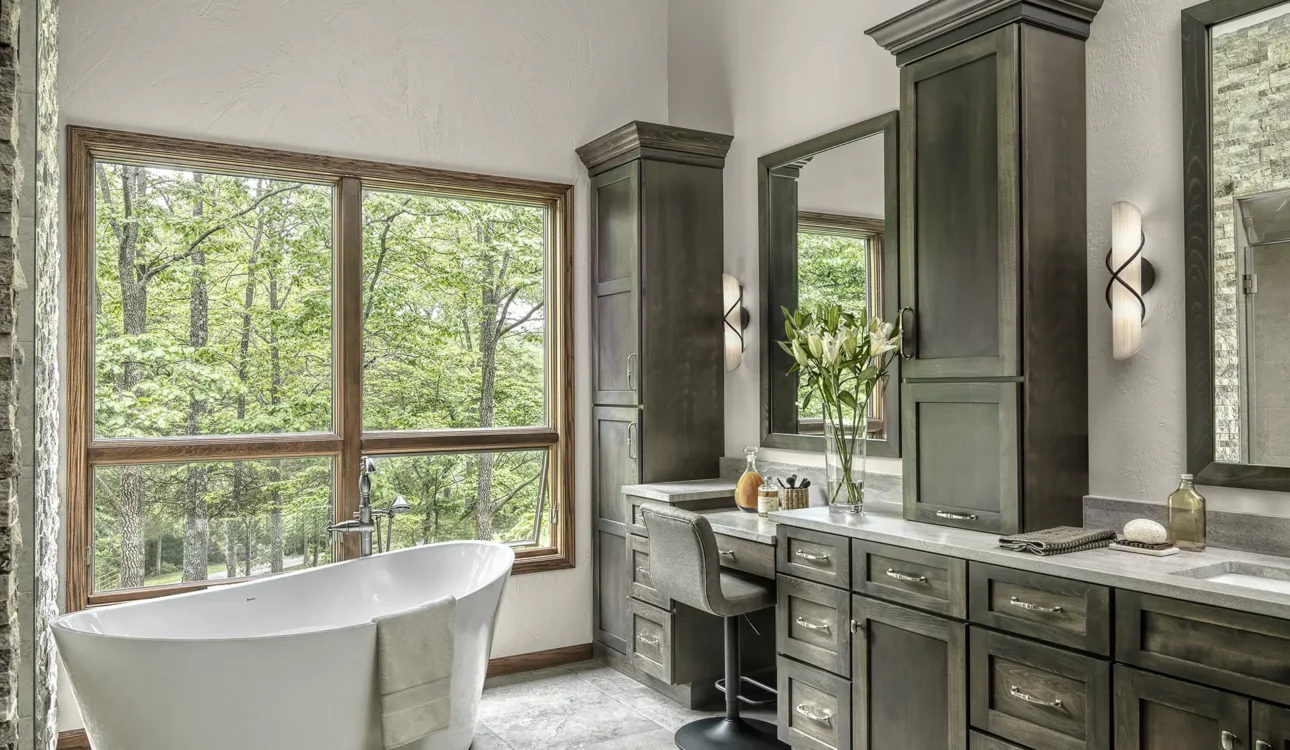
In the St. Louis and Columbia, Missouri markets, bathroom remodel costs typically range from $25,000 for a simple refresh to $65,000 or more for a fully customized luxury renovation, according to 2024 Cost vs. Value data for the St. Louis market. However, it’s important to remember that every project will differ depending on the labor, materials, and scope of work required.
There are several reasons to update your bathroom, including refreshing outdated finishes, improving daily comfort, and increasing resale value. But when clients sit down with RSI’s design team, one question almost always comes first: How much will my bathroom remodel cost? Bathroom remodel cost estimates are typically based on the bathroom size and scope of work, helping you understand what to expect for your specific project.
Given the wide range of possible costs, it’s essential to set a realistic budget before starting your bathroom remodel to ensure proper planning and to account for any unexpected expenses.
The Average Cost of Bathroom Remodeling in Missouri
The cost to remodel a bathroom in Missouri varies based on size, materials, the home’s age, and whether you’re changing the layout. Costs can also vary based on your location, bathroom size, and the specific scope of your project. According to a 2024 Cost vs. Value Report, St. Louis homeowners can expect the following average investments for bathroom remodeling projects:
| Project Type | Average Job Cost (St. Louis) | Resale Value Added | Cost Recouped |
| Bathroom Remodel | Midrange | $24,817 | $14,289 | 57.6% |
| Bathroom Remodel | Upscale | $77,523 | $30,638 | 39.5% |
| Bathroom Remodel | Universal Design | $40,070 | $15,551 | 38.8% |
Performing simple cosmetic updates, such as new paint, lighting, fixtures, and hardware, will typically fall well below these midrange thresholds. However, projects involving plumbing changes, layout reconfiguration, or full gut renovation will move costs closer to the figures above.
What Impacts Bathroom Remodel Cost?
Several major factors influence your overall bathroom renovation cost. Understanding them helps you make informed decisions and set a realistic budget.
Scope of Work: Cosmetic Refresh vs. Full Remodel
A cosmetic update and a full gut renovation are dramatically different investments.
Cosmetic Updates Typically Include:
- New paint
- Updated lighting
- Vanity replacement
- New faucets and fixtures
- Hardware upgrades
These improvements modernize the space without changing plumbing or layout.
Full Remodel Projects Often Include:
- Removing floors and walls
- Reconfiguring plumbing
- Updating electrical systems
- New tile flooring and shower walls
- Layout changes
- Custom cabinetry
When plumbing is relocated or walls are moved, labor costs increase significantly, directly impacting your total bathroom remodel cost.
Age of the Home
Missouri homes vary widely in age and construction type.
Homes built prior to 1970 often used mud-set wall tile, which is extremely labor-intensive to remove. During demolition, we frequently uncover:
- Outdated plumbing lines
- Insufficient or aging electrical systems
- Hidden water damage
- Subfloor deterioration
- Insulation issues
Because these issues are not visible until demolition begins, we recommend setting aside a 10–20% contingency allowance, particularly for older homes in St. Louis and Columbia.
Bathroom Size & Layout
Square footage plays a major role in determining the cost to remodel a bathroom.
Larger bathrooms require:
- More tile
- Larger or double vanities
- Expanded showers
- Freestanding tubs
- Additional lighting
More materials and more labor naturally increase the overall bathroom renovation cost.
Materials & Finish Selections
Material choices are one of the biggest drivers of cost.
Upgrading to premium materials can elevate your bathroom — but it also increases your investment.
Tile
Tile can range from $1.50 to $100+ per square foot, depending on:
- Material type (ceramic vs. natural stone)
- Tile size
- Installation pattern (mosaics and herringbone require more labor)
- Waterproofing systems
Fully waterproofed shower systems, or converting a space into a wet room, increase labor and material costs but provide long-term durability.
Heated flooring is another popular upgrade in Missouri homes and is often more affordable than homeowners expect.
Fixtures
Major fixture investments include:
- Vanities and cabinetry
- Sinks
- Toilets (standard models to smart bidet units)
- Bathtubs
- Shower systems
- Shower glass
Freestanding tubs, custom walk-in showers, and smart toilets increase your master bathroom remodel cost.
We encourage homeowners to view products in person at our St. Louis and Columbia showrooms to compare materials, finishes, and quality firsthand.
Plumbing & Labor
Labor accounts for the largest share of most bathroom renovation budgets, typically 40–65% of the total project cost.
Costs increase when:
- Plumbing fixtures are relocated
- Drain pipes are rerouted
- Walls are opened
- Waterproofing systems are upgraded
- Second-floor structural work is required
Licensed plumbing and electrical work must meet local code requirements, and professional labor ensures your renovation is safe, durable, and compliant.
What Goes Into a Bathroom Remodeling Project?
Understanding the process helps homeowners see where their investment goes and what to expect from start to finish. With turnkey remodeling services, one team handles every step below, from the first consultation through final cleanup.
Here’s how a professionally managed remodel typically unfolds:
1. Design Consultation
Hiring a professional designer is one of the smartest investments you can make in a bathroom remodel. At RSI Kitchen & Bath, our experienced bathroom designers create functional layouts, help select materials within budget, coordinate contractors, manage timelines, source products through trusted suppliers, and reduce costly mistakes. General contractors play a key role in sourcing materials for your project, often securing discounts and ensuring timely delivery to maintain quality and efficiency.
Working with a local design team familiar with construction practices in St. Louis and Columbia reduces rework and prevents budget overruns. Our designers also leverage long-standing relationships with local trades and suppliers, helping control costs and streamline scheduling.
During this stage, your designer will:
- Evaluate your current layout
- Assess the existing layout to identify opportunities for cost savings and practicality
- Evaluate the floor plan to determine if changes to the layout or relocating fixtures are needed
- Identify functional challenges (storage, lighting, traffic flow)
- Measure the space
- Discuss style preferences
- Review inspiration images
- Establish a realistic investment range
This is also when layout improvements are explored, such as expanding a shower, eliminating an unused tub, or improving vanity storage. Evaluating the floor plan and existing layout at this stage is crucial for developing a remodeling plan that balances functionality and cost.
A thoughtful design plan minimizes costly changes during construction and helps keep your bathroom remodel costs predictable.
2. Material Selections
Once the layout is finalized, material selections begin.
This includes choosing:
- Cabinetry and vanity style
- Countertops
- Floor and shower tile
- Plumbing fixtures
- Lighting
- Hardware and accessories
Selections directly influence your overall bathroom renovation cost. For example, ceramic tiles are a popular, budget-friendly flooring option that can update your space without significant structural changes. Upgrading to new fixtures can also affect your total cost, as modern or upscale fixtures often command a premium. When considering bathroom materials, keep in mind that budget-friendly materials include vinyl flooring and laminate countertops, while high-end options include stone and marble. Natural stone tile and custom cabinetry will increase your investment compared to ceramic tile and semi-custom options.
Visiting a showroom to see finishes in person often helps homeowners make confident decisions that align with both style and budget.
3. Budget Finalization
After design and selections are complete, your proposal is finalized.
This step includes:
- Detailed labor estimates
- Material pricing
- Allowances (if applicable)
- Contingency planning for older homes
These elements together determine your total project cost, which reflects the overall budget impact of your bathroom remodel. As you finalize your budget, consider whether each decision makes financial sense for your long-term goals and investment.
4. Permit Applications (if required)
Many bathroom renovations require permits, particularly when plumbing, electrical, or structural elements are involved.
Your remodeling team will:
- Submit permit applications
- Ensure drawings meet local code
- Coordinate with municipal offices
St. Louis and Columbia municipalities have specific building and inspection requirements, particularly related to:
- Waterproofing systems
- Ventilation standards
- GFCI electrical protection
- Structural framing modifications
Properly handling of permits protects your home’s resale value and ensures your project complies with all safety standards.
5. Demolition
Demolition marks the beginning of physical transformation.
This phase may include:
- Removing existing tile and flooring
- Tearing out cabinetry and vanities
- Removing tubs or showers
- Opening walls for plumbing and electrical updates
This is where you may uncover hidden costs, such as mud-set tile, outdated plumbing lines, or concealed water damage. Addressing these properly ensures your new bathroom is built to modern standards.
Improper demolition or DIY mistakes can lead to costly repairs, so it’s important to approach this phase carefully or hire professionals to avoid unnecessary expenses.
6. Plumbing & Electrical Rough-In
Before finishes are installed, the behind-the-scenes infrastructure is updated.
This stage includes:
- Installing new plumbing lines
- Relocating drains or supply lines (if needed)
- Relocating drain pipes (if needed)
- Updating electrical wiring
- Adding recessed lighting or exhaust fans
- Installing shower waterproofing systems
If fixtures are being relocated, this is often where a significant portion of your master bathroom remodel cost is allocated.
Keep in mind that moving plumbing lines, including rerouting drain pipes, can add thousands more to your project due to increased labor and code compliance requirements.
7. Inspections (local code compliance)
Before finishes are installed, the behind-the-scenes infrastructure is updated.
This stage includes:
- Installing new plumbing lines
- Relocating drains or supply lines (if needed)
- Updating electrical wiring
- Adding recessed lighting or exhaust fans
- Installing shower waterproofing systems
8. Installation of Tile, Cabinetry, & Fixtures
This is when your new bathroom truly takes shape.
Installation typically includes:
- Tile flooring and shower walls
- Tile installation
- Tub surround
- Custom or semi-custom cabinetry
- Countertops
- Sinks and faucets
- Toilets and shower systems
- Shower glass installation
- Trim and finishing details
- Fresh paint
- Light fixtures
- New fixtures
Intricate tile patterns, specialty finishes, and freestanding tubs can increase installation time and influence the final bathroom remodel cost.
Simple updates such as painting walls, replacing a faucet, or installing a new showerhead can modernize a bathroom without major construction.
9. Final Inspection
Once installation is complete, a final inspection is conducted (if required by your municipality).
This ensures:
- All systems function properly
- Fixtures are securely installed
- Code requirements are fully satisfied
A professional team will also complete a detailed internal quality review before considering the project complete.
10. Cleanup & Project Completion
The final stage includes:
- Debris removal
- Professional cleaning
- Final walkthrough with the homeowner
- Care and maintenance guidance
At this point, you’re left with an updated bathroom that reflects both your style and your investment, whether you chose a modest refresh or a full luxury renovation. An updated bathroom enhances daily comfort and adds value to your home.
Bathroom Remodeling for A Range of Budgets
You don’t need a six-figure budget to achieve a beautiful, functional bathroom. Successful remodeling projects require careful planning and, at times, professional guidance to avoid costly mistakes.
Simple updates to your bathroom floor and bathroom walls can quickly refresh the space and add value. At RSI Kitchen & Bath, we work closely with homeowners in St. Louis and Columbia, offering bathroom remodeling services that align with their style and budget.
Whether you’re considering a simple update or a full master bathroom renovation, our team can help you understand your true bathroom remodel cost before construction begins.
Ready to start the conversation? Connect with our design team today.