

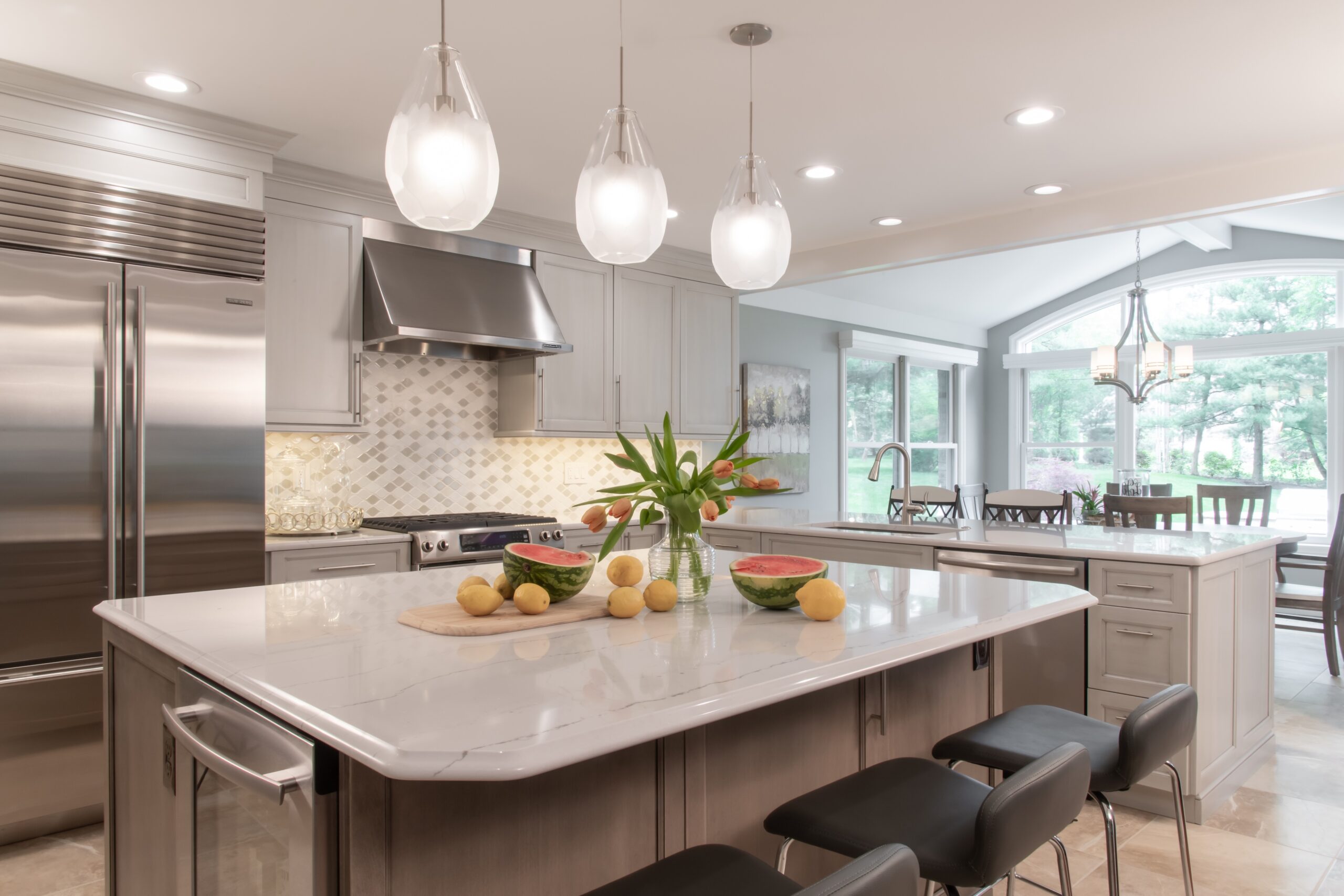
An open-concept kitchen design is one of the most requested remodeling upgrades among homeowners, and it’s easy to understand why. Removing walls to connect your kitchen to your dining and living areas can completely transform how your household moves, communicates, and entertains.
But many homeowners learn the hard way that opening up a floor plan isn’t as simple as swinging a sledgehammer. A successful open-concept kitchen remodel requires thoughtful planning around structural integrity, functional zones, storage, lighting, and design cohesion. Without the right approach, you risk ending up with a space that feels unfinished, chaotic, or far more expensive than anticipated.
At RSI Kitchen & Bath, we’ve helped homeowners throughout the St. Louis and Columbia areas design and build kitchens they love living in. Whether you’re just beginning to explore open-kitchen layout ideas or ready to move forward, this guide will walk you through the key kitchen design considerations before you start your remodel.
What Is an Open-Concept Kitchen?
An open-concept kitchen is a kitchen floor plan design that eliminates or minimizes the walls separating the kitchen from adjacent living spaces, most commonly the dining room and living room. Rather than operating as a closed-off room, the kitchen becomes a natural extension of the home’s shared gathering spaces.
Common features of open-concept kitchens include kitchen islands that anchor the space, shared sightlines across multiple rooms, and an absence of full-height walls between functional areas. The result is a layout that feels larger, more connected, and more suited to the way most modern families actually live.
Why People Love Open-Concept Layouts
The popularity of open-concept kitchens isn’t a passing trend. It reflects a real shift in how homeowners want to use their space. Here’s what drives the appeal:
- Improved natural light flow: Without walls interrupting sunlight’s path, light moves more freely throughout the home, making the entire space feel brighter and more inviting.
- Better traffic flow and accessibility: Open layouts eliminate bottlenecks, making it easier to move between the kitchen, dining room, and living room, especially during gatherings.
- Enhanced social interaction and entertaining: Whether you’re prepping dinner while your family watches TV or hosting a party, an open layout keeps you connected to your guests without being isolated in a separate room.
- Increased home value appeal: Open-concept floor plans remain a top feature buyers look for, which can boost resale value.
Evaluate The Space Before Removing Walls
Before any walls come down, there’s critical groundwork to lay, literally and figuratively. Skipping this step is one of the most common (and costly) mistakes homeowners make when pursuing an open-concept kitchen remodel.
Load-Bearing Walls and Structural Considerations
Not every wall in your home is the same. Load-bearing walls support the structural weight of your home, including the roof, upper floors, and the frame itself. Non-load-bearing walls, sometimes called partition walls, simply divide spaces without carrying structural load.
Removing a load-bearing wall without proper structural support can compromise your home’s integrity. Before any demolition begins, a licensed contractor or structural engineer should assess your home’s framing and identify which walls can be safely modified. In some cases, a steel or engineered beam will need to be installed to take over the wall’s load-bearing function, which is a cost and complexity factor that should be built into your project plan from the start. In two-story homes, walls may also house ductwork, plumbing, and electrical systems that serve the upper floor, and rerouting those systems adds another layer of complexity that requires expert consultation before work begins.
Square Footage and Layout Flow
More space isn’t always better space. One of the subtler challenges in open-concept kitchens is maintaining clearly defined functional zones within a larger, undivided area. If the layout isn’t thoughtfully planned, you can end up with an oversized room that feels vague and difficult to furnish.
Ceiling height and proportions also matter. Ceiling heights can differ between rooms, and removing a wall can suddenly make that difference impossible to ignore. Correcting a ceiling height discrepancy is a significant and often expensive undertaking, and in some cases, a header beam will be required to bridge the transition. Homes with lower ceilings may feel more balanced with partial walls or design elements that help define spaces, while taller ceilings open the door to more dramatic visual features. The key is to create a layout that feels intentional, not just open.
Plan for Functional Zones
One of the most important principles in modern kitchen layouts is understanding that removing walls doesn’t mean removing organization. In fact, clearly defining separate zones for cooking, dining, and living becomes even more important when those areas share a single continuous space.
Defining Kitchen, Dining, and Living Areas
Without walls to create natural boundaries, open-concept spaces rely on design elements to do the work. Here are the most effective tools for defining zones without physical barriers:
- Islands: a well-placed kitchen island is perhaps the most powerful zone-defining tool available. It creates a visual and physical boundary between the cooking zone and the rest of the living space while adding valuable prep space, seating, and storage.
- Rugs: Area rugs anchor furniture groupings and signal to the eye that a living or dining zone begins here. Layering rugs throughout an open-concept space helps each area feel purposeful.
- Lighting: Strategic light fixture placement reinforces zones; pendant lights over an island say “this is the kitchen,” while a chandelier over a dining table anchors that space as distinct from both the kitchen and living room.
- Furniture placement: The arrangement of sofas, dining tables, and chairs plays a significant role in communicating spatial boundaries, even without walls.
The Work Triangle Still Matters
The kitchen work triangle, the spatial relationship among your sink, stove, and refrigerator, remains one of the most enduring principles in kitchen floor plan design. It was developed to minimize unnecessary movement during cooking by keeping these three key work areas within a compact, efficient path.
In an open-concept layout, the work triangle may need to be adapted. With more space available and the potential for larger islands or expanded layouts, the risk of an inefficient workflow actually increases if the triangle isn’t intentionally preserved. A well-designed open kitchen keeps the cook’s core movement zone tight and functional, even when the surrounding space is expansive.
Storage Solutions in Open Kitchens
One of the most common concerns homeowners raise when considering an open-concept kitchen is storage. When walls disappear, so do some of the surfaces that traditionally held upper cabinets. Planning for smart, sufficient storage from the very beginning is essential.
Maximizing Cabinet Space
The good news is that modern cabinetry offers solutions that go far beyond the standard upper-and-lower cabinet arrangement:
- Floor-to-ceiling cabinets: Running cabinets all the way to the ceiling maximizes vertical storage and creates a dramatic, custom look. This is particularly effective on the wall opposite the open side of the kitchen.
- Deep drawers and pull-outs: Deep base drawers and pull-out shelves make storage more accessible and organized than traditional fixed shelving. They’re especially practical for pots, pans, and pantry items.
- Cabinet organization inserts: Custom dividers, built-in organizers, and pull-out waste bins keep interiors functional and reduce clutter, especially important in an open layout where the kitchen is always visible.
Incorporating Multi-Functional Islands
A thoughtfully designed island does more than provide counter space. The most effective islands in open-concept kitchens serve triple duty:
- Storage: Drawers, cabinets, and pull-outs built into the island add significant storage capacity without requiring additional wall space.
- Seating: Overhangs for bar stools create an informal dining area that bridges the kitchen and living space naturally.
- Prep and work space: An island gives the cook a dedicated workspace that doesn’t conflict with traffic flowing through the rest of the open area.
Hidden storage solutions, such as built-in shelving on the living-room-facing side of an island, can also display cookbooks, plants, or decorative objects while keeping the open space feeling curated rather than cluttered.
Lighting Design Is Critical
In a closed kitchen, lighting is straightforward. You need to see what you’re cooking. In an open-concept kitchen, lighting becomes a design tool that shapes the feel of multiple spaces simultaneously. Getting it right requires intentionality.
Layered Lighting Approach
Effective open-concept kitchen lighting uses three distinct layers working in concert:
- Ambient lighting: The base layer that illuminates the overall space. Recessed ceiling lights are a common choice in modern kitchen layouts for ambient coverage.
- Task lighting: Focused light for work surfaces, such as under-cabinet lighting for the counter, pendant lights directly over the island, and directional lighting over the stove.
- Accent lighting: Decorative lighting that adds depth and visual interest. This includes cabinet interior lighting, toe-kick lighting, or lighting inside glass-front cabinets.
The goal is balance; each zone in the open-concept kitchen should have lighting that serves it, while the overall lighting scheme feels unified rather than mismatched.
Statement Fixtures for Visual Separation
In addition to function, lighting fixtures are one of the most powerful design tools available in an open-concept space:
- Pendant lights over islands: A row of pendant lights above an island reinforces the kitchen zone and creates strong visual interest. Pendant styles should complement the overall kitchen design, whether it’s industrial, modern, traditional, or transitional.
- Chandeliers over dining areas: A chandelier or linear suspension fixture above the dining table signals clearly that this is the dining zone, anchoring the space in the same way a rug does on the floor.
Mixing fixture styles can work beautifully in open-concept spaces, as long as the finishes are coordinated.
Maintain Design Cohesion Across Spaces
One of the hallmarks of a professionally executed open-concept kitchen design is the sense that the kitchen, dining area, and living room feel like one unified space rather than three separate rooms sharing the same footprint. Achieving cohesion requires deliberate decision-making about materials, finishes, and color.
Consistent Materials and Finishes
In an open layout, the eye travels continuously across the entire space. That means mismatched cabinetry styles, flooring transitions, or clashing hardware will be impossible to ignore. The most successful open-concept kitchen remodels establish a material and finish palette that flows naturally from zone to zone:
- Cabinetry: Kitchen cabinetry should harmonize with any built-ins in the adjacent living room. This doesn’t mean they need to be identical, as complementary styles and tones can work, but they should feel intentionally related.
- Flooring: Consistent flooring throughout the open-concept space (or very intentional transitions) prevents visual choppiness that can undermine the layout’s openness.
- Hardware and fixtures: Matching or coordinating metal finishes across the kitchen, dining, and living areas, whether brushed nickel, matte black, or warm brass, creates a polished, unified look.
Coordinated Color Palette
Color is one of the most effective tools for creating visual continuity in an open-concept space:
- Neutral base: A neutral foundation of whites, warm greiges, or soft grays gives the entire space visual breathing room and makes it easier to layer in personality through accents and materials.
- Accent colors: Consistently using one or two accent colors in cabinet paint, tile, upholstery, or decor connects the kitchen to the adjacent living areas and reinforces the sense of a unified space.
- Flow between areas: The color transitions between zones should feel gradual and intentional, not abrupt. A kitchen island painted in the same or complementary tone as a living room accent wall, for example, creates a subtle thread of visual continuity.
Consider Noise, Smells, and Privacy
Open-concept living comes with real lifestyle trade-offs that are worth thinking through before you commit to removing walls. These are some of the honest considerations every homeowner should weigh.
Managing Kitchen Noise
When the kitchen is integrated with the rest of the living space, appliance noise from dishwashers, range hoods, or blenders carries further than it would in an enclosed room. A few design choices can mitigate this:
- Quiet appliances: Many premium appliance manufacturers offer dishwashers and refrigerators specifically engineered for low decibel operation. When selecting appliances for an open-concept kitchen, noise ratings are worth considering.
- Soft-close cabinetry: Soft-close hinges and drawer glides eliminate the jarring sound of cabinet doors and drawers slamming, which is a small but meaningful quality-of-life upgrade in an open kitchen.
Ventilation and Odor Control
In a closed kitchen, cooking odors are contained. In an open-concept layout, they travel. A high-quality, properly sized range hood is non-negotiable in an open-concept kitchen to maintain air quality throughout the home. Look for range hoods with adequate cubic feet per minute (CFM) ratings for your cooking habits and stove size, and ensure proper ductwork is planned into your project from the start.
Creating Semi-Private Spaces
Full openness isn’t always the right solution for every household. If you need some visual separation for a home office, quieter sitting area, or simply a sense of architectural interest, there are ways to create it without fully closing off the space:
- Partial walls or half-walls: These preserve some openness while creating a physical boundary that can also serve as a display surface or bookshelf.
- Glass panels: Glass partitions, or the choice to install integrated glass doors, allow light to pass through while providing a visual and acoustic barrier.
- Strategic layout planning: Sometimes the placement of islands, built-ins, or furniture groupings is enough to create a sense of enclosure without any structural elements at all.
Work With a Professional Designer
An open-concept kitchen remodel is one of the most complex yet rewarding projects a homeowner can undertake. The decisions made early in the process have a cascading effect on everything that follows: structural choices shape layout options, layout options influence storage solutions, storage solutions influence the lighting plan, and so on. Having an expert guide that process from the beginning saves time, money, and significant stress.
Benefits of Professional Planning
- Avoid costly mistakes: Professionals identify structural, electrical, and plumbing constraints early, before those constraints become expensive mid-project surprises.
- Optimize layout and functionality: An experienced kitchen designer understands how open kitchen layout ideas translate into real, livable spaces. They can anticipate workflow issues and solve them on paper before a single cabinet is ordered.
- Ensure structural safety: A professional team coordinates with structural engineers and contractors to ensure any wall removal is executed safely and correctly.
Custom Solutions for Your Lifestyle
No two households are alike. The best open-concept kitchen for a young family with three kids looks very different from the ideal layout for a couple who loves to entertain. A professional designer takes the time to understand how you actually live in your home, and then builds a design around that reality rather than a generic template.
At RSI Kitchen & Bath, our designers work with you to create a kitchen that integrates your personal style with thoughtful functionality. We approach every design project with expertise and meticulous attention, using high-quality products and finishes to deliver the kitchen you’ve always wanted within your budget.
Common Questions About Open-Concept Kitchens
Are open-concept kitchens still in style?
Yes, open-concept kitchens remain one of the most sought-after features in residential remodeling. While some homeowners are selectively reintroducing partial walls for acoustic or privacy reasons, the open-concept layout continues to dominate new construction and renovation projects alike. The key is thoughtful execution.
Do open kitchens reduce storage space?
They can, if storage isn’t proactively planned for. Removing walls eliminates some traditional upper-cabinet locations, but smart design solutions such as floor-to-ceiling cabinetry, multi-functional islands, and deep drawer systems more than compensate when incorporated from the start. A well-planned open-concept kitchen can offer equal or greater storage than its closed counterpart.
Does an open-concept layout work in every home?
Not necessarily. Homes with structural constraints, very small square footage, or specific lifestyle needs, such as frequent large-scale cooking or a need for acoustic privacy, may not be ideal candidates for a fully open layout. A professional assessment is the best way to determine whether an open-concept kitchen is feasible and beneficial for your specific home and household.
Ready to Transform Your Kitchen?
An open-concept kitchen is a fundamental shift in how your home functions and feels. When it’s planned and executed well, it can be one of the most impactful changes you make to your home.
RSI Kitchen & Bath has the experience, expertise, and design resources to help you get it right. Visit our St. Louis or Columbia showroom to see what’s possible in person, or contact us today to schedule your design consultation. Let the designers at RSI help make your kitchen design dreams a reality.